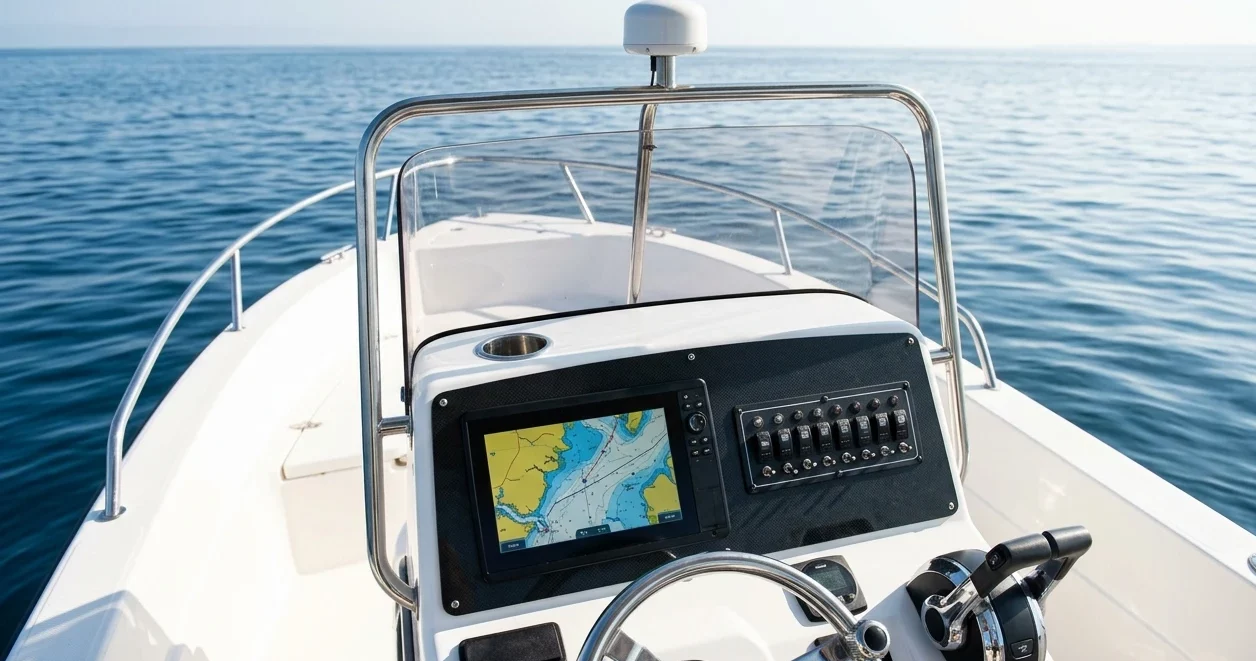
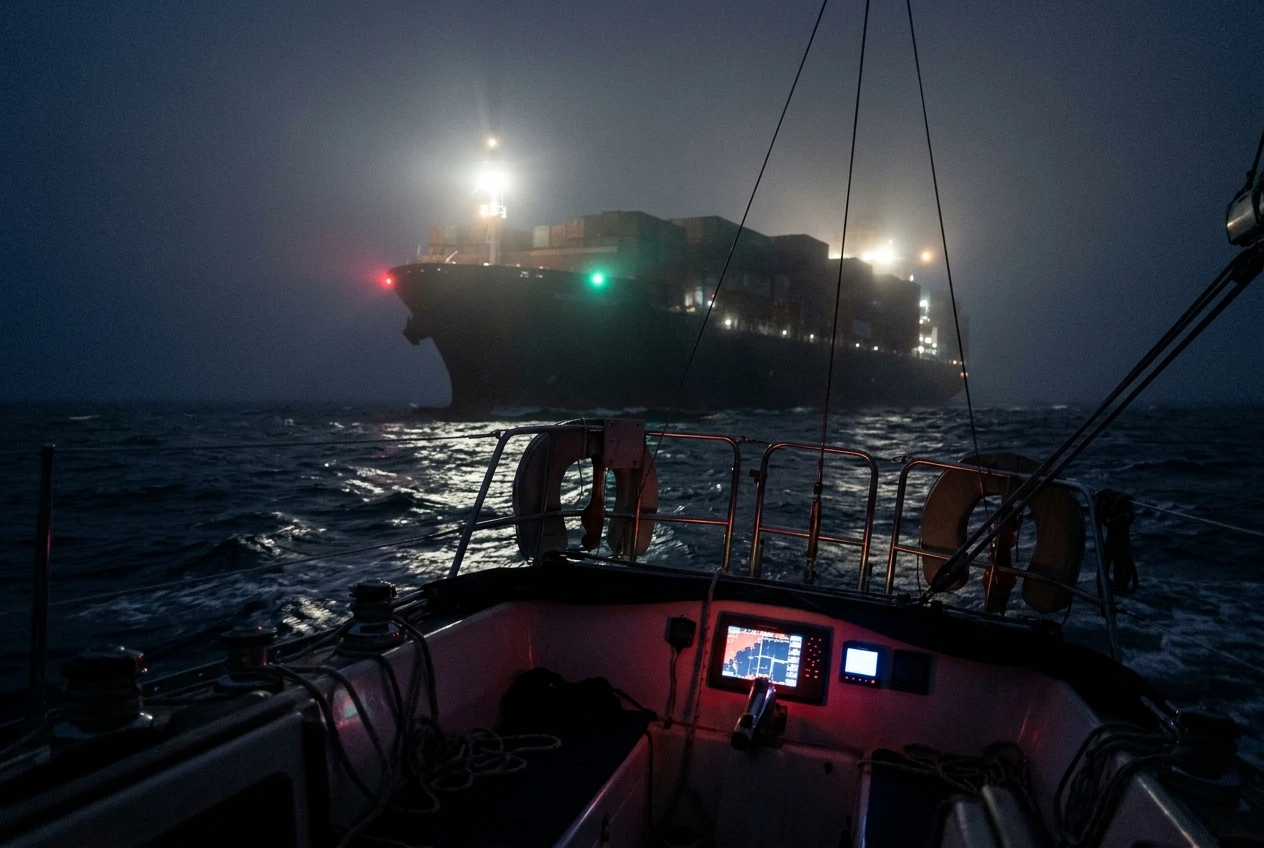
Two boxes on a chandlery shelf can both be labeled AIS. One listens, and the other listens and talks. They look similar, connect to the same chart plotter, and the receiver costs less, making it a tempting default. The question is what you give up by staying quiet, and who pays for it.
What a receiver does and what a transponder adds
An AIS receiver tunes to the two VHF channels AIS uses and decodes the position messages that nearby ships and boats broadcast. It passes them to your chart plotter, a tablet or a dedicated display. Each target typically shows a name, an MMSI number, course, speed, and, on many plotters, the closest point of approach and the time until you reach it. A receiver needs no GPS of its own, because it only reads what others send.
A transponder does all of that and also transmits. Your boat sends its own MMSI, name, position, course, and speed to every AIS receiver in range. That means it needs a GPS position, either from a built-in antenna or from your existing instruments. It also needs your MMSI programmed in and, in many countries, a ship radio license. Recreational boats are generally not required to carry AIS, though rules vary by country, so this is your decision to make.
Seeing traffic is not the same as being seen by it
With a receiver, you know where the ships are, and they know nothing about you. Every decision to avoid a collision is yours. You have to spot the target early, work out the closest point of approach, and alter course while there is still room to do it gently. The details of that process are in our piece on how AIS actually prevents collisions on busy sailing routes, so it is not repeated here.
A transponder adds a second party to the encounter. A ship that shows your boat on its own AIS display shows your name, course, and speed to the watchkeeper. Large ships turn and stop slowly, so any help from their side matters. If you are only a faint, intermittent radar return among wave clutter, an AIS target gives the watch keeper a firm position and track to work with.
Two cautions apply. Transmitting does not give you right of way, and it does not replace a visual lookout. Whether a ship’s crew notices your target also depends on how their equipment is set up and how closely they watch it. Being on their screen improves your odds without guaranteeing anything. If you are comparing AIS with radar as a first purchase, radar or AIS on a sailboat covers what each one misses.
Who actually benefits when your boat broadcasts
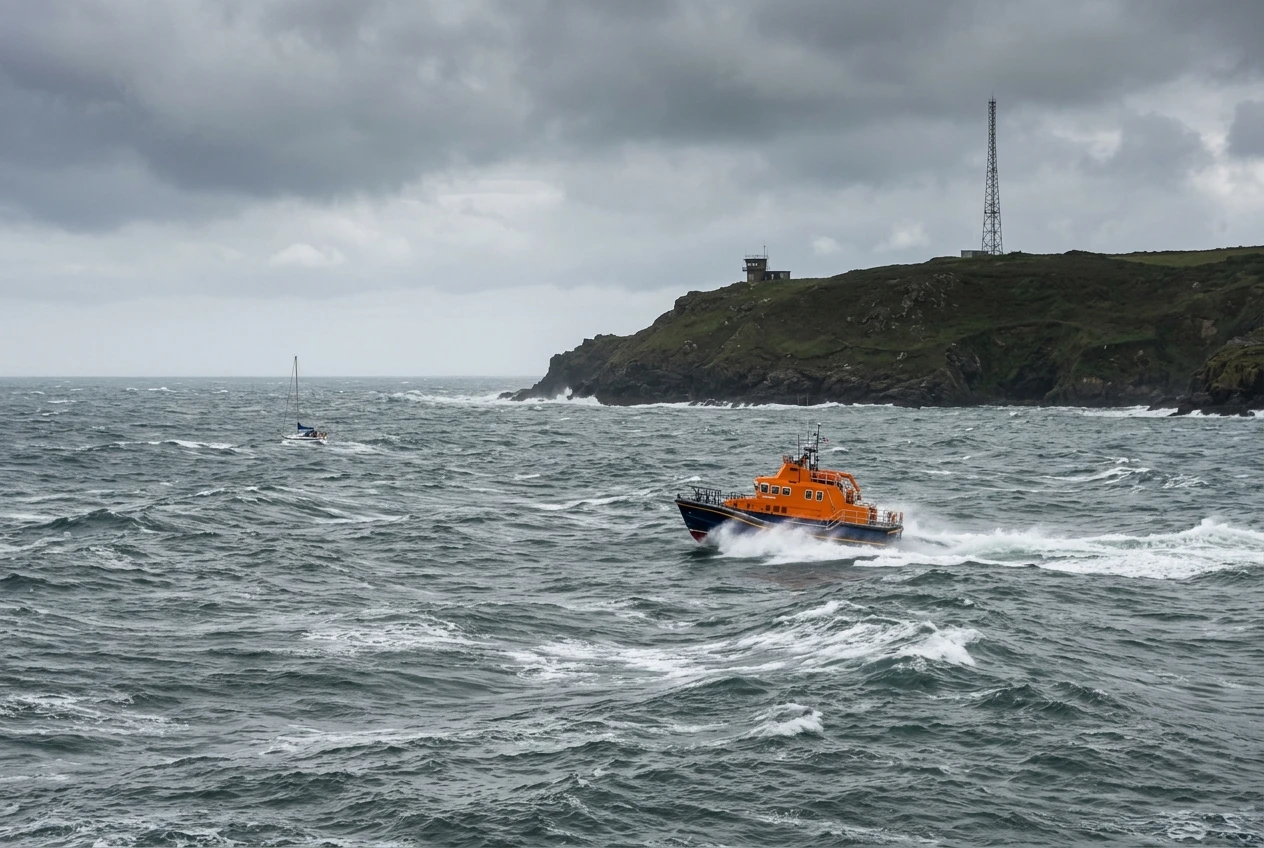
Broadcasting helps a wider group than the person who pays for the unit.
- Ships. Watchkeepers get an identified, tracked target for your boat. This matters most at night, in fog, in a seaway where a small hull disappears in the waves, and in busy channels where a yacht could be hidden among larger traffic.
- Other yachts. Boats with a receiver or a transponder see you as well. In a crowded approach or an anchorage in poor visibility, other skippers can see your heading and speed. They can also call you by name on VHF instead of describing you as “the white sloop with the red dodger.”
- Rescuers. If you call for help, a vessel that sees your AIS target knows where you are before you finish reading out your position. A track of recent positions also gives searchers somewhere to start if communication is lost. This does not replace a distress alert; the sequence for that is in what happens when you press the DSC distress button.
- People ashore. Shore-based AIS stations feed public tracking websites, so family or friends can often follow a boat that is within coverage. Coverage varies with location and antenna height, so it should not replace a check-in schedule.
A receiver gives none of these benefits to anyone. Its value is to you alone, and that is a legitimate use, but it should be a deliberate choice.
Where a receiver is a reasonable choice, and the gaps it leaves
A receiver is enough for some sailors. Typical examples:
- Day sailors in sheltered water, away from shipping lanes, who are home by dark.
- Boats in areas with almost no commercial traffic, where the main hazard is other small craft, most of which carry no AIS anyway.
- Boats with a tight power budget and short passages, where a small saving in draw matters.
- Sailors who want traffic awareness now and plan to upgrade after using it.
Even in those cases, a receiver leaves gaps. It shows only vessels that transmit, so it will not show a fishing boat without AIS, most small yachts, floating debris or a buoy that has dragged. It tells you nothing about anything that sends no signal, and radar or a good visual watch has to cover that. How many ships appear also depends on your antenna. A receiver on a low antenna or a shared VHF aerial will hear fewer distant targets than one on a masthead.
The larger gap is the one covered above: nobody else sees you. If you are in trouble and cannot call, the receiver gives nobody any information about where you are.
What transmitting costs you: money, power, installation and the privacy question
Money. A transponder costs more than a receiver, and installation adds to the total. Prices vary by brand and class, so check the current figures. The guide to AIS transponders worth fitting to an offshore sailboat covers what to check before you buy.
Power. Transmitting draws more than listening. The draw depends on the model and on how often it sends, so read the manufacturer’s figures for receiving and for transmitting. Add both to your daily consumption and see what it does to the totals. Building a power budget for your boat’s safety systems walks through that sum.
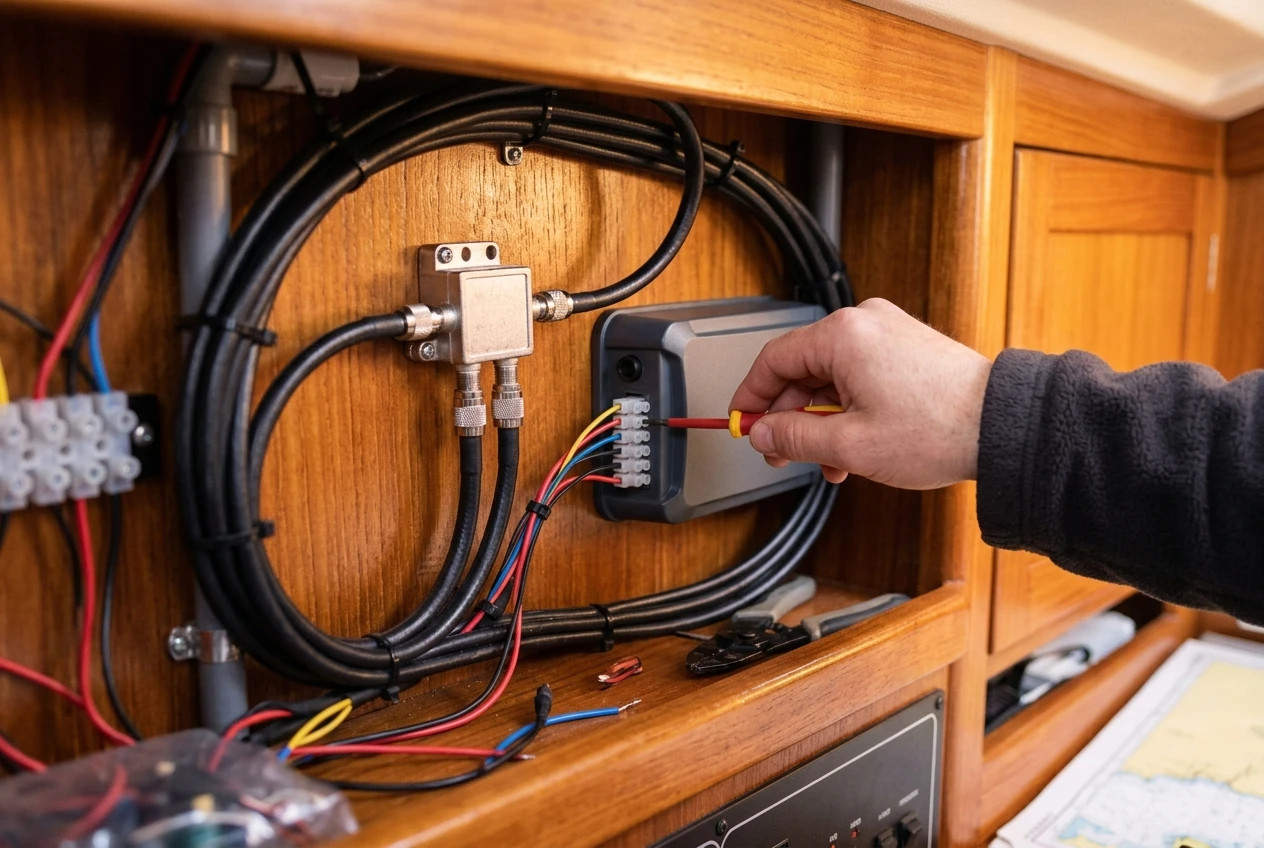
Installation. A transponder needs a VHF antenna — either a dedicated one or a shared VHF aerial through a splitter — a GPS antenna if it doesn’t use your existing one, a data connection to the chart plotter, and an MMSI programmed in. Some units include a built-in splitter. Others expect you to supply one. Fitting a splitter or a second antenna is more work than plugging in a receiver.
Privacy. Anyone with a receiver or an internet connection to a tracking site can see your boat’s name, MMSI, position, course, and speed. At anchor or on a mooring, that tells people where your boat is and, by implication, where you are not. Many transponders have a silent mode that stops transmitting while still receiving. The catch is that in silent mode you are back to being unseen, so decide beforehand when you will use it.
A simple way to choose based on where and how you sail
Start with where your passages put you in relation to commercial traffic.
- You cross shipping lanes, approach busy ports or sail offshore. Fit a transponder. The people most likely to hit you carry AIS, and a transponder lets their watchkeepers see you.
- You sail at night, in fog or short-handed. Transmit. Those are the conditions in which your own watch is least reliable, and a second party watching your target gives you a margin.
- You sail in daylight in sheltered water, away from commercial traffic. A receiver is enough, especially if you also watch for unlit or non-AIS craft.
- Your power budget is tight. Compare the transponder’s figures with your daily totals. If it fits, the safety gain usually outweighs the draw.
- You expect to move up later. Buy a receiver now and choose a wiring route, antenna, and data connection that a transponder can reuse.
If you are still undecided, think about the worst night you expect to have on the boat. If it involves a ship, a fog bank, or a long crossing, a transponder belongs on the boat. If it involves a short motor home from the next bay, the receiver already covers what you need.
This article was created with AI assistance and reviewed by a human editor.
Disclosure: This post contains Amazon affiliate links. If you buy through them, we may earn a small commission at no extra cost to you.
About The Author


