If someone asks me how to navigate at sea if my GPS is dead, the first thing I would answer is never go out to sea without a backup GPS option.
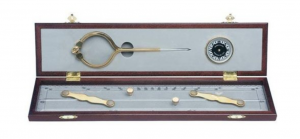
I don’t want to talk much about things and tools that are so familiar to professional mariners, like updated paper nautical charts, parallel rulers, dividers, log books, and some other nautical instruments. These traditional marine navigation tools and devices should be a must-have on board.
It is not discussable that GPS and other satellite navigation systems are a great help for safe navigation.
Hi-tech marine chart plotters and professional ECDIS (an Electronic Chart Display and Information System is a geographic information system used for nautical navigation that complies with International Maritime Organization (IMO) regulations as an alternative to paper nautical charts) significantly increase safety on the sea routes.
Nevertheless, marine navigation officers studying at marine schools obtain knowledge of how to navigate by celestial objects like stars and planets. How to calculate dead reckoning considering currents and winds. Any merchant ship has radar and a gyrocompass, and knowing the object on the nautical chart and the same target on the land, you can get a high-accuracy ship’s position.
Unfortunately for many pleasure craft skippers, navigating as Caribbean pirate’s style is not such an easy task. And to be honest, why all this necessarily also you should know.
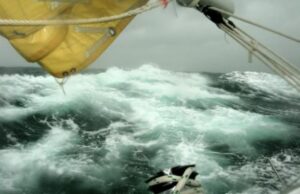
Before I continue, I would like to reiterate its position on this issue. The sea should not be underestimated. The weather can change instantly, and you must be constantly ready for extreme situations.
So, it is just smart and safe to have a backup for important equipment and devices. I mean life-saving tools, navigation, radio, fuel, sails and spare parts.
Let’s go back to the topic, how to sail without a GPS Magic wand. Better to say, how to navigate the high seas without electronic navigation equipment like GPS, radar, DECCA, LORAN, and others.
You might ask me, Why do I need to know it as nautical knowledge takes years to learn.
My answer is yes, theoretically not necessary to know how to find your geographical position by Sun or Polar Star, or how to calculate the boat’s drift when sailing in flood tide or ebb tide.
Having and knowing how to properly use GPS for boats, with updated electronic marine charts, will accomplish this task relatively easily.
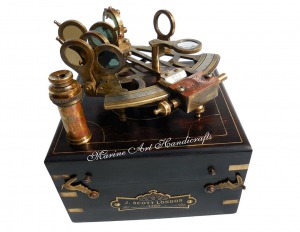
Well, but what about the feeling of the ancient mariner and romance? Why not try a sextant and a chronometer to obtain your geographical coordinates on the globe? Trust me; it is such a great feeling when, with the help of the sextant, by determining the angle between the Sun and the horizon, plus fixing the correct time, you can find a ship’s position in pre-calculated tables.
I know it because I used to do it in my professional job on the board of merchant ship back in 80ies.
It really is a great feeling that after 2,400 nautical miles from latest landmarks on the Azores archipelagos you find that Mona Passage entrance to Carribean basin is just a couple of miles off your waypoint.
As soon as you visually observe the coast, you can find the known charted objects and by measuring angles with the help of a sextant between at least three (or even two) landmarks, obtain your position.
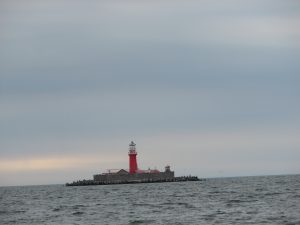
Coming closer to the Lighthouse, you can measure the vertical sextant angle (VSA) of an object as the height is known and stated on the nautical chart, and after simple calculation, determine the distance from the object.
Why am I talking about these old-style traditional marine navigation calculation activities?
First of all, the feeling and belief that you are not dependent only on Electronics. Maybe in real life, you never meet such a situation when all yacht GPS devices are down, but you’ll be sure not to get lost boat’s position.
Secondly, boredom, especially when you are on a sailboat, and it is calm weather or no wind at all.
Learning the star globe is fun. Today, you do not need to carry a real globe box, although it’s exciting. You only need to download the Starglobe app from the App Store or Google Play. At least I got satisfaction from learning and searching stars in warm southern nights when nothing but ocean calm water and endless starry sky are your allies. After two or three mistakes, you are becoming smarter and finding the Polar Star is a piece of cake.
Today, it is much easier to achieve good results for obtaining your boat’s geographical coordinates by the traditional astronavigation method. I mean that you can check results by standalone GPS navigation or even by the Navionics app on your iPhone.
Is it hard to get traditional nautical navigation skills?
Definitely, it takes some time to get perfect results, but no one forced you to do that; it is for your pleasure, and you get satisfaction from learning and practicing.
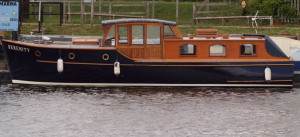
In conclusion, I would like to say that sailing the seven seas or even two days of Baltic Sea crossing on a sailboat or an old-fashioned style Gentleman’s Cruiser is a real romantic adventure. You have to be even a little romance, and then any sailing poses a real pleasure.
Where to get the traditional marine navigation knowledge?
I checked my favorite Amazon database and found so many valuable books, DVDs, and other tools for skippers of sailboats and any other pleasure crafts for coastal and ocean sailing.
So, why not make your next Atlantic crossing more adventurous? Do some research, ask more experienced skippers for advice, recheck your good sailboat with safety equipment expiration dates, go on a two-day training trip in stormy weather, and you are ready to sail for an unforgettable sea voyage.
About The Author



Your post is extremely helpful for those of us looking for a way to navigate the sea without being tied to a GPS. Learning this is very important for unexpected occurrences such as power outages or system failures as you mentioned. The knowledge you shared on using the stars for position and landmarks for distance is very insightful and something that I will remember. I also liked the fact that you mentioned items that should always be on board like spare parts, flashlights and radios. It serves as a good check list before heading out. Great job!
Thanks John for stopping by.
As I wrote using sextant or star globe nowadays is more for the fun and self-education, through knowing these navigational tools would be very helpful in the emergency situation. When we talk about life-saving appliances, everything has to be in due order and sufficient numbers.