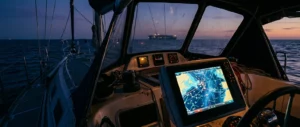
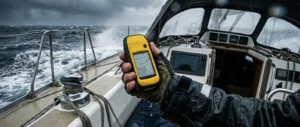
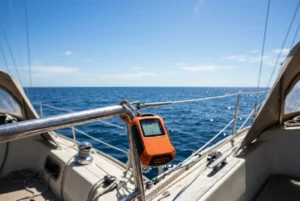
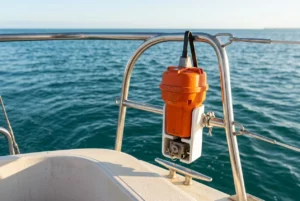
Most sailors asking about radar vs. AIS for sailboats can only afford one this season. The useful way to decide is to ask what each system cannot show you, because that is the gap you will be living with. Then match that gap to the way you sail.
This article covers the blind spots of each system and a buying order for coastal, offshore, short-handed, night and fog sailing. For how each one works, the site already has how AIS prevents collisions on busy sailing routes and the fundamentals of marine radar systems. Here the focus is on the decision.
The question underneath radar vs AIS: what can each one not see?
Both systems answer one question: Is something out there that I could hit, or that could hit me? They answer it from opposite directions, so they fail in opposite places.
AIS depends on the other vessel. A ship or boat appears on your screen only if it carries a transponder, the transponder is switched on, it has a valid GPS fix, and its VHF signal reaches your antenna. If any of those is missing, the vessel doesn’t exist as far as AIS is concerned, and the screen looks the same as an empty sea.
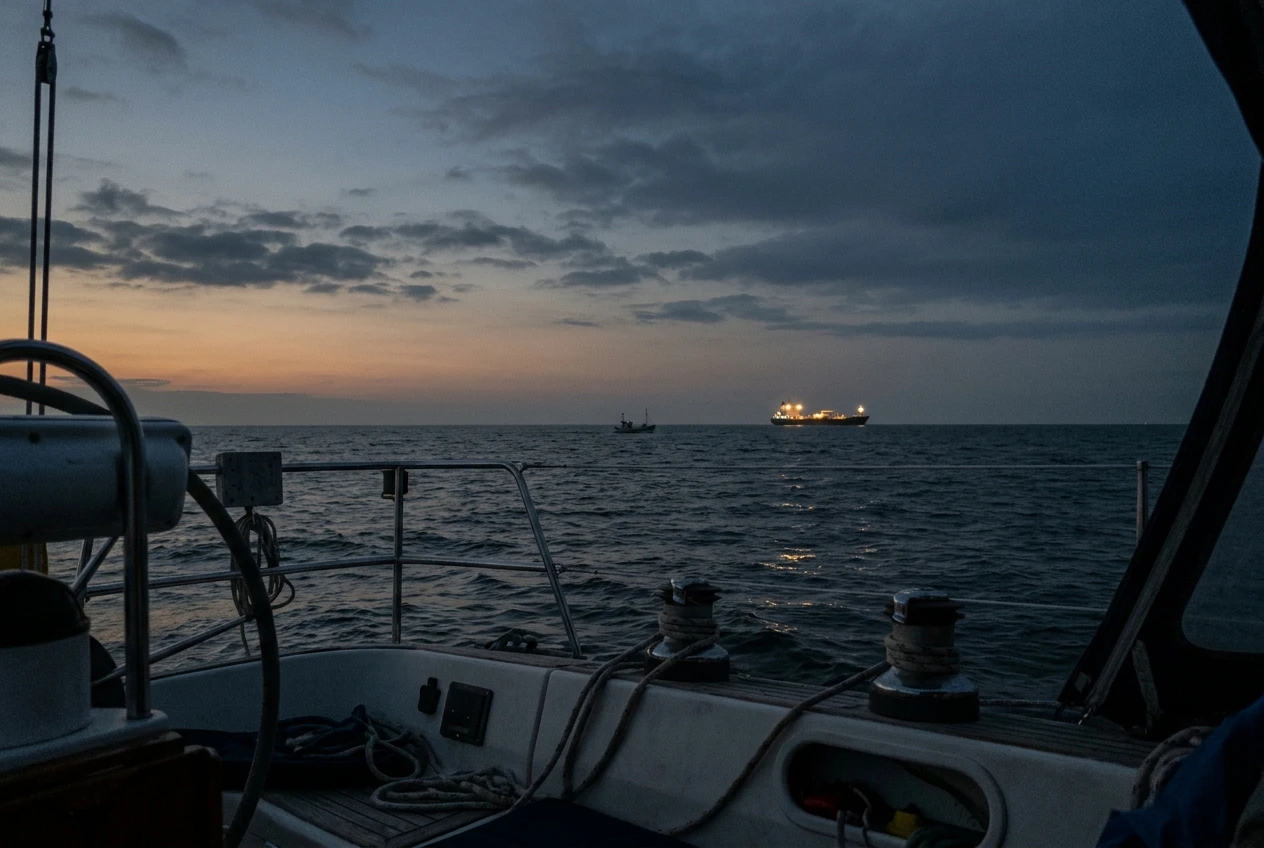
Radar depends on physics. It sends out energy and displays what bounces back, whether or not the target cooperates. That makes it the only one of the two that can show a fishing boat with its transponder off, a drifting log line of kelp-covered debris, a squall, or a headland in the dark. But a radar echo is just an echo. It has no name, no size and no stated intention.
Put side by side:
- AIS cannot show any vessel that isn’t transmitting, and it says nothing about weather, land, or floating hazards.
- Radar cannot tell you who a target is, what it is doing or where it plans to go, and it can miss small or low-reflecting targets in clutter.
Everything else in this article follows from those two sentences.
What AIS shows you that radar never will, and where it goes silent
An AIS target carries information a radar echo cannot. You get the vessel’s name and MMSI, its dimensions, its speed and course over the ground, and usually its heading. Your plotter or AIS display uses that data to calculate the closest point of approach and the time until it happens, so a ship that will pass 0.2 miles ahead of you is flagged long before you could judge it by eye.
Three AIS advantages matter most for a cruising boat:
- Identity. You can call a ship by name on the VHF instead of broadcasting “vessel on my starboard bow”. The watchkeeper on a commercial ship knows immediately which vessel you mean.
- Intent, to a degree. Course, speed and rate of turn are reported by the vessel itself, so you see a turn when it starts rather than waiting for several radar sweeps to show it.
- Range past the horizon of your eyes. A ship can appear on the screen while it is still hull-down, because VHF reaches further than the visible horizon from a low cockpit.
AIS goes silent in predictable places:
- Vessels with no transponder. Carriage requirements apply to larger commercial ships. Many fishing boats, workboats, and most recreational craft aren’t required to carry AIS, and many don’t.
- Transponders that are off or failing. Some operators switch them off, and others have a unit with a bad antenna or a bad GPS feed.
- Poor reception on your side. On a sailboat, the antenna is often low and shares a cable run with the VHF. A badly installed antenna cuts the range at which you see targets.
- Entered data that is wrong. Position and speed come from GPS, but a crew member types in some fields, such as navigational status. A ship shown as “at anchor” may not be.
The practical risk is the quiet one. A screen full of AIS targets looks like a complete picture of the traffic, but it shows only the vessels that chose, or were required, to appear.
What radar shows you that AIS never will, and where it struggles
Radar shows what is physically present within range. That includes every vessel large enough to return an echo, plus land, buoys, rain cells, squall lines, and, in some conditions, floating objects. In darkness or fog it is the only electronic way to see an unlit or non-transmitting boat approaching.
Offshore sailors also use radar for weather. A rain cell or squall shows as a patch of returns, and watching it move relative to your track gives you time to reef before the wind arrives. AIS says nothing about that.
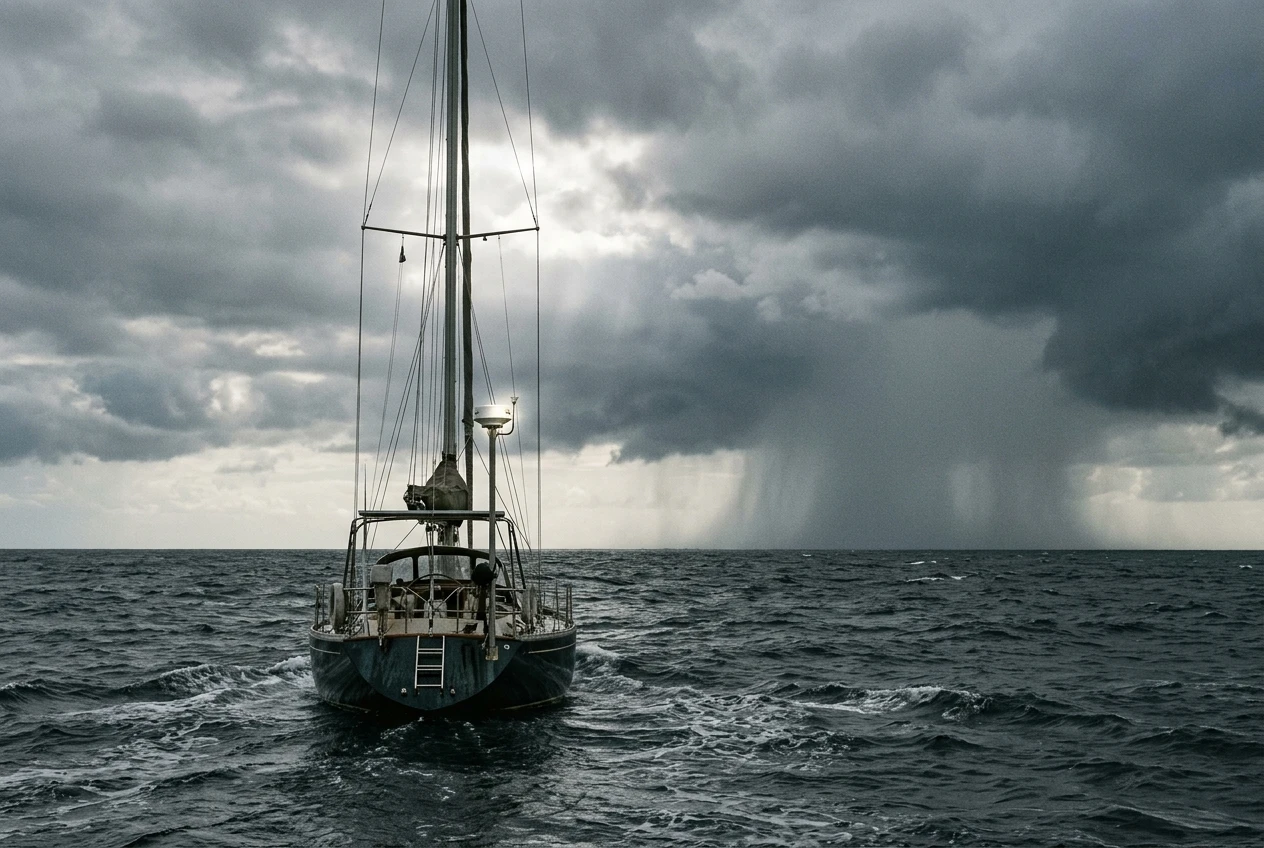
Radar also has real limitations:
- Weak echoes from small boats. A small fiberglass or wooden boat reflects little energy, and a weak echo can disappear in the waves. A boat with a radar reflector shows better, which is one reason a reflector on your own boat is worth having, whichever system you choose.
- Sea clutter and rain clutter. In a seaway, wave returns fill the screen near the boat, and small targets can hide in them. Adjusting gain, sea and rain settings takes practice, and the right settings change as conditions change.
- Blind and shadow sectors. A mast, a mizzen, or a headland can block part of the picture, and anything behind a headland is completely hidden.
- Heel and pitch. The radar beam has a vertical spread, and a boat heeled hard or pitching badly points it at the sky or the water for part of each sweep.
- No identity. An echo could be a container ship, a trawler or a buoy. You work out which from its size, its movement and the chart.
- Limited intent. On a basic display, you see where the echo is now. If your radar has target tracking (MARPA or ARPA), it estimates the target’s course and speed after several sweeps, but it calculates this from the echo’s movement, and the calculation can be wrong or jump to another target in clutter.
Radar also takes more from the boat. The antenna needs a clear view, and the unit draws more power than an AIS receiver or transponder. On a small boat with limited battery capacity, check the draw against what your charging can replace before you decide.
AIS receive-only, Class B transponder, or radar: matching the choice to how you sail
AIS comes in two forms that behave very differently, so you are really choosing among three options.
AIS receive-only lets you see transmitting vessels but not be seen by them. It is the cheapest way into AIS and gives you the identity, course, and closest-approach data described above. The weakness is that large ships’ watchkeepers cannot see you on their own AIS screens. If you are crossing a shipping lane, you are relying on them spotting you by eye or on their radar, and a small sailboat can be hard to pick out on a ship’s radar in a seaway.
A Class B transponder adds transmission. Your boat appears on other vessels’ AIS displays with your name and position, and anyone who wants to reach you can call you by name on VHF. Class B transmits at lower power and with lower priority than Class A units fitted to commercial ships, and it reports less often. It is still the standard choice for recreational boats. Transmitting generally also requires an MMSI for the boat, so check how your registration authority issues it.
Choose radar when the missing information concerns vessels that will not show up on AIS, or conditions AIS cannot describe.
Here is how that works out for different kinds of sailing:
- Daylight coastal sailing in heavy traffic. The danger is commercial shipping and ferries, which carry AIS. A transponder or receiver covers most of it, and in good visibility, your eyes cover the rest.
- Coastal sailing in fishing grounds or crowded small-boat areas. Many of the boats you pass will not transmit. Radar matters more here, especially at dusk and after dark.
- Offshore passages. Traffic is thin, but a miss has worse consequences, and you will be tired. Both systems earn their place, and the order depends on the route, which the later sections cover.
- Sailing in regions with frequent fog. Radar moves to the top of the list, and a transmitting AIS is the second purchase so that ships can see you.
If your budget covers one, write down which description most closely matches your last season of sailing. That tells you which blind spot is the more expensive one for you.
Fog, night and short-handed watches: where the gap between the two hurts most
Three conditions widen the gap between what the systems show.
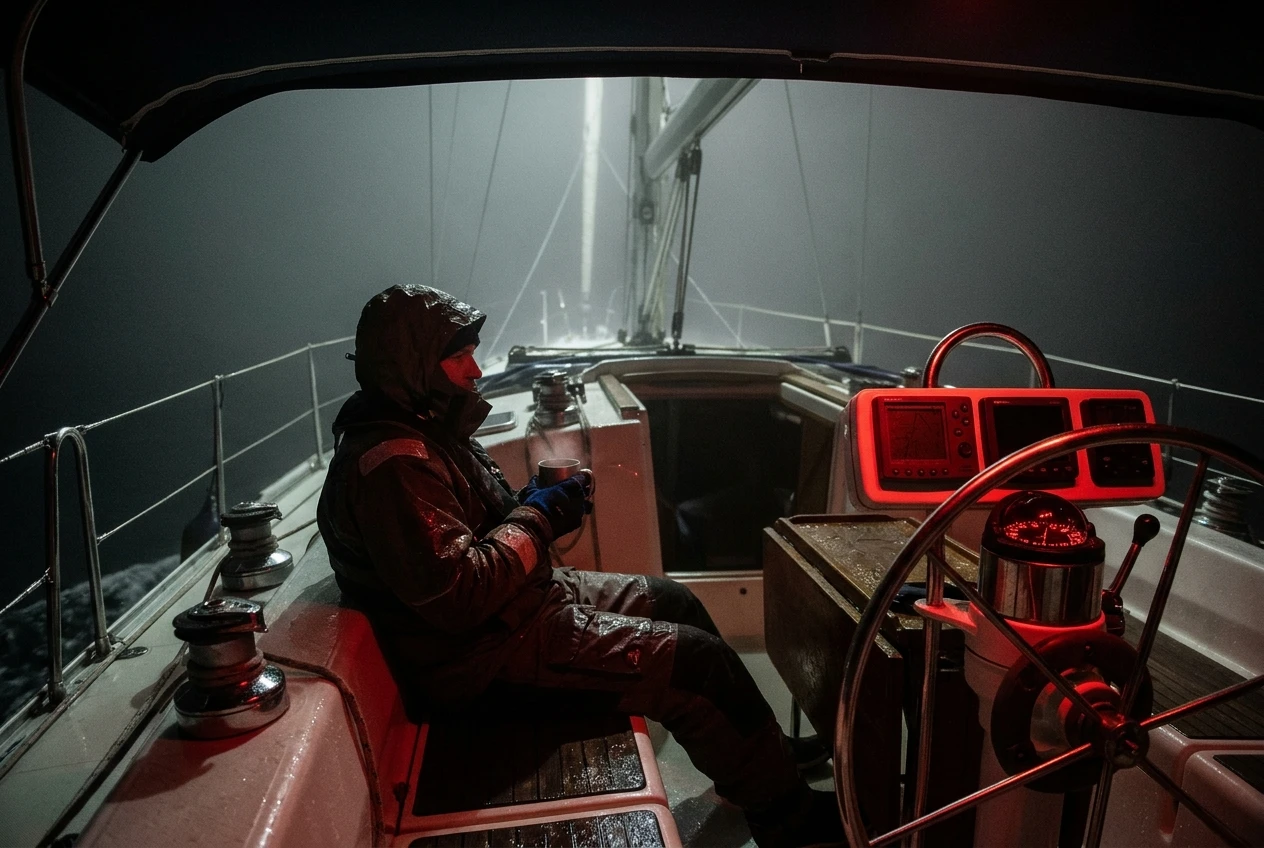
Fog removes your eyes from the system. In fog, AIS tells you about every transmitting vessel and nothing about the rest, including the vessels most likely to be close to you, such as local fishing boats and other small craft. Radar sees them if the echo is strong enough. Transmitting AIS also matters in fog because it lets a ship’s bridge team identify you, something a radar echo from a small sailboat may not do reliably.
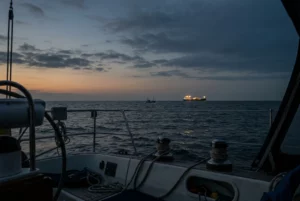
Night is less severe than fog, because lights give you some information. Still, a boat with no lights, or with lights hidden behind sails or a high sea, is visible only to radar. AIS gives you an early look at ships, so you can decide which light belongs to which vessel and what it will do.
Short-handed watches are where alarms decide the outcome. One person on watch will sometimes look down at a chart, make tea, trim a sail or doze. Both systems offer alarms:
- An AIS alarm sounds when a transmitting vessel is predicted to pass within a distance you set. It is quiet in a good way because it reacts only to real, identified targets.
- A radar guard zone sounds when any echo enters a sector or ring you define. It covers vessels without AIS, but waves and rain can cause false alarms, and a watchkeeper who gets too many false alarms will switch the alarm off.
Neither alarm replaces waking someone when a close situation develops, and both are worth testing with the boat’s real settings before you rely on them offshore.
Why the best answer is both, and which to buy first on a limited budget
Used together, the two systems cover each other’s weak spot. When a radar echo matches an AIS target, you know who it is and can read its course and speed from the vessel’s own data. When you see an echo with no AIS target, you know you are looking at a vessel that isn’t transmitting, so treat it with more caution, since you cannot predict what it will do.
If you can only buy one first, here is a defensible order for each type of sailing:
- For mostly daylight coastal sailing, with commercial traffic as the main concern, buy a Class B transponder first. It is usually cheaper than radar, draws less power, takes less installation work, and lets ships see you. A receive-only unit is a reasonable stopgap if the budget is tight, but it leaves you invisible to the ships you are trying to avoid.
- Coastal sailing in fog-prone waters or among many small fishing boats: buy radar first, because the main risk is the vessel that does not transmit.
- Offshore passages with long stretches in shipping lanes: buy a Class B transponder first, so that ships can see you while you rest. Add radar next for squalls, unlit vessels and fishing boats.
- Offshore passages through fishing grounds or regions with many non-AIS vessels: radar comes first, and the transponder follows.
- Short-handed offshore: whichever system matches the traffic on your route, plus its alarm configured and tested. The second system should be the next purchase, not a later one.
- Frequent night passages: radar earns a higher position than it would for daylight sailing, with AIS close behind.
The order is a starting point. Two practical checks can change it. First, check your electrical system: if the battery bank and charging cannot supply radar for a long watch, that changes the cost well beyond the price on the box. Second, look at your mast and rigging layout: if there is no good place for the radar antenna, the installation could cost as much as the unit.
If you plan a second system, buy it before adding extras to the first. A radar with a better display is worth less than a transponder that makes you visible, and vice versa.
What neither replaces: lookout, collision regulations and a working watch routine
Both systems add information to a lookout and replace none of it. Collision regulations require a proper lookout by sight and hearing, as well as all available means, and they apply to every vessel regardless of what is on the chart table.
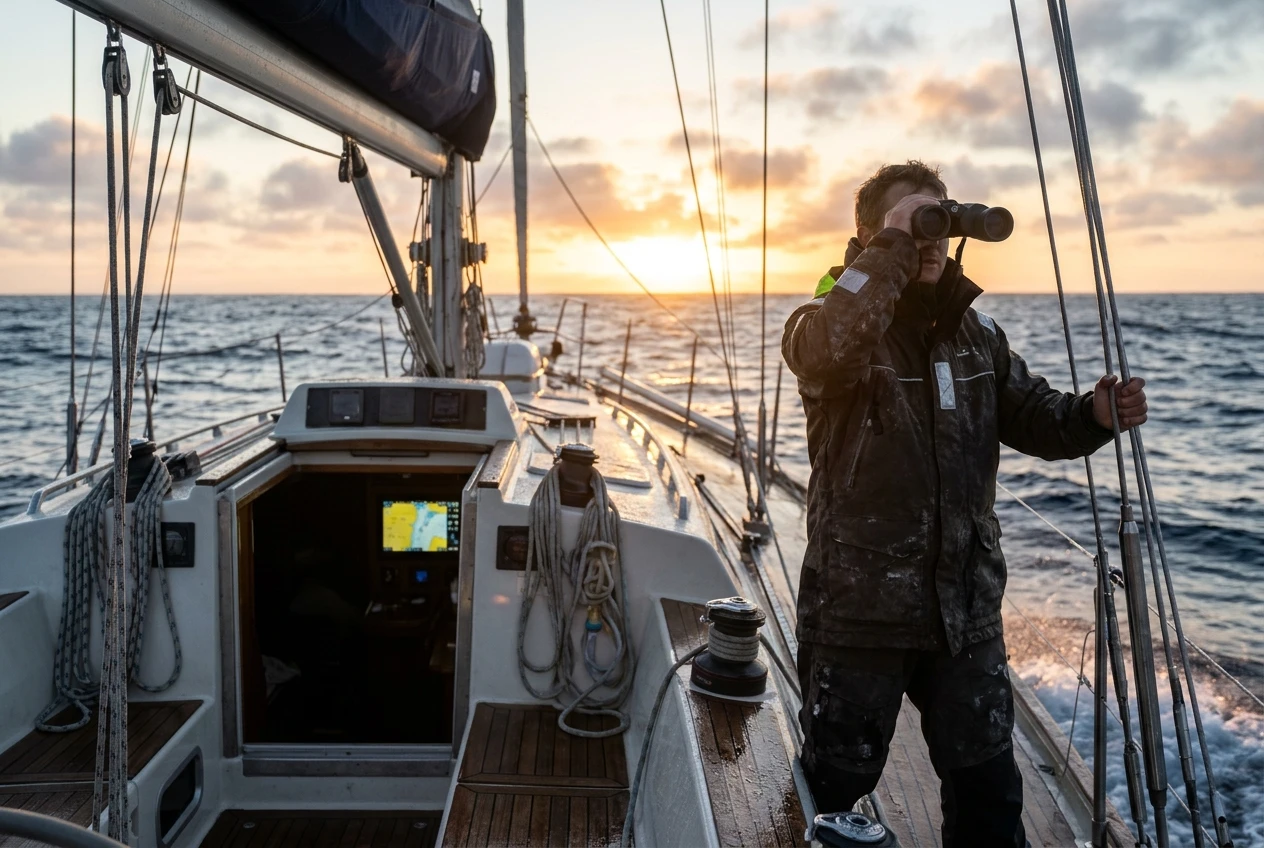
Some habits make electronics useful rather than dangerous:
- Keep a visual lookout and regularly sweep the horizon. A target on the screen prompts you to look in that direction, and a screen with no targets is no reason to stop looking.
- Use the data to make early, obvious alterations. The collision regulations call for action that is large enough for the other vessel to notice. A small course change that only shows on your own plotter won’t help the other watchkeeper.
- Set alarms to a distance you will really act on. An alarm set too tight gives you no time, and one set too wide goes off constantly and gets switched off.
- Agree a watch routine and keep to it. Decide how often the watchkeeper looks around, when to wake the other crew, and what counts as a close situation.
- Know your displays before you need them. Learn the radar’s gain and clutter controls in daylight and calm water, where you can see the effect of each setting on targets you can also see by eye.
Collision avoidance is one part of a boat’s safety equipment, and it competes for budget with lifejackets, beacons, communications, and more. Before you commit your budget to radar or AIS, check what else belongs on board: read The Safety Equipment Every Boat Needs Before It Leaves the Dock and see where collision avoidance sits among the rest of your gear.
This article was created with AI assistance and reviewed by a human editor.
Disclosure: This post contains Amazon affiliate links. If you buy through them, we may earn a small commission at no extra cost to you.
About The Author