A phone in your pocket is fine for finding the nearest gas station. It is not fine at minus 25°C, with frozen fingers, no cell signal and a whiteout rolling across a lake you have never crossed before. That is the moment a proper snowmobile GPS earns its price.
In this guide I compare the best GPS for snowmobile riders in 2026, from dedicated powersport navigators to rugged handhelds and satellite communicators. I judged each one on what actually matters on a sled: screen readability in snow glare, glove-friendly controls, cold-weather battery behaviour, trail maps, mounting options and, most importantly, what happens when something goes wrong far from help.
Quick Picks: Best Snowmobile GPS 2026
| Product | Best for | Screen | Satellite SOS | Power |
|---|---|---|---|---|
| Garmin Tread 2 | Best overall for trail riders | 6″ glove-friendly touchscreen | Via paired inReach | Sled power |
| Garmin Montana 710i | Best for backcountry and mountain riding | 5″ glove-friendly touchscreen | Built-in inReach | Rechargeable battery, up to 24 h GPS mode |
| Trail Tech 912 Voyager | Best GPS + digital gauge combo | Colour display with engine data | No | Sled power |
| Garmin inReach Mini 3 Plus | Best safety backup | 1.9″ colour touchscreen | Built-in inReach | Up to 350 h (10-min tracking) |
| RAM Mounts handlebar kit | Best mounting upgrade | — | — | — |
👉 Check today’s prices on Amazon
What to Look For in a Snowmobile GPS
Before we get into the reviews, here are the five things that separate a real snowmobile GPS from a car navigator strapped to the bars.
1. Snowmobile trail maps. The single biggest feature. A GPS with preloaded snowmobile trail networks shows you groomed routes, trail numbers, fuel stops and warming huts. Without that, you are navigating on generic topo lines.
2. Glove-friendly, bright display. You will not take your gloves off at -20°C. Look for a large touchscreen that works with gloves, or physical buttons, and a display that stays readable in bright snow glare.
3. Weather and cold resistance. Look for at least an IPX7 water rating and a rugged build (MIL-STD-810 is a good sign). Snow melts on warm electronics, refreezes and gets everywhere.
4. Power source. Sled-powered units never run flat while the engine runs. Battery-powered handhelds can come off the bars and go with you if you have to walk out. Lithium-ion batteries lose capacity fast in deep cold, so plan for it.
5. Satellite communication. Backcountry and mountain riders should treat two-way satellite messaging and SOS as essential. Cell coverage disappears exactly where riding gets most dangerous.
1. Garmin Tread 2 – Best Overall Snowmobile GPS
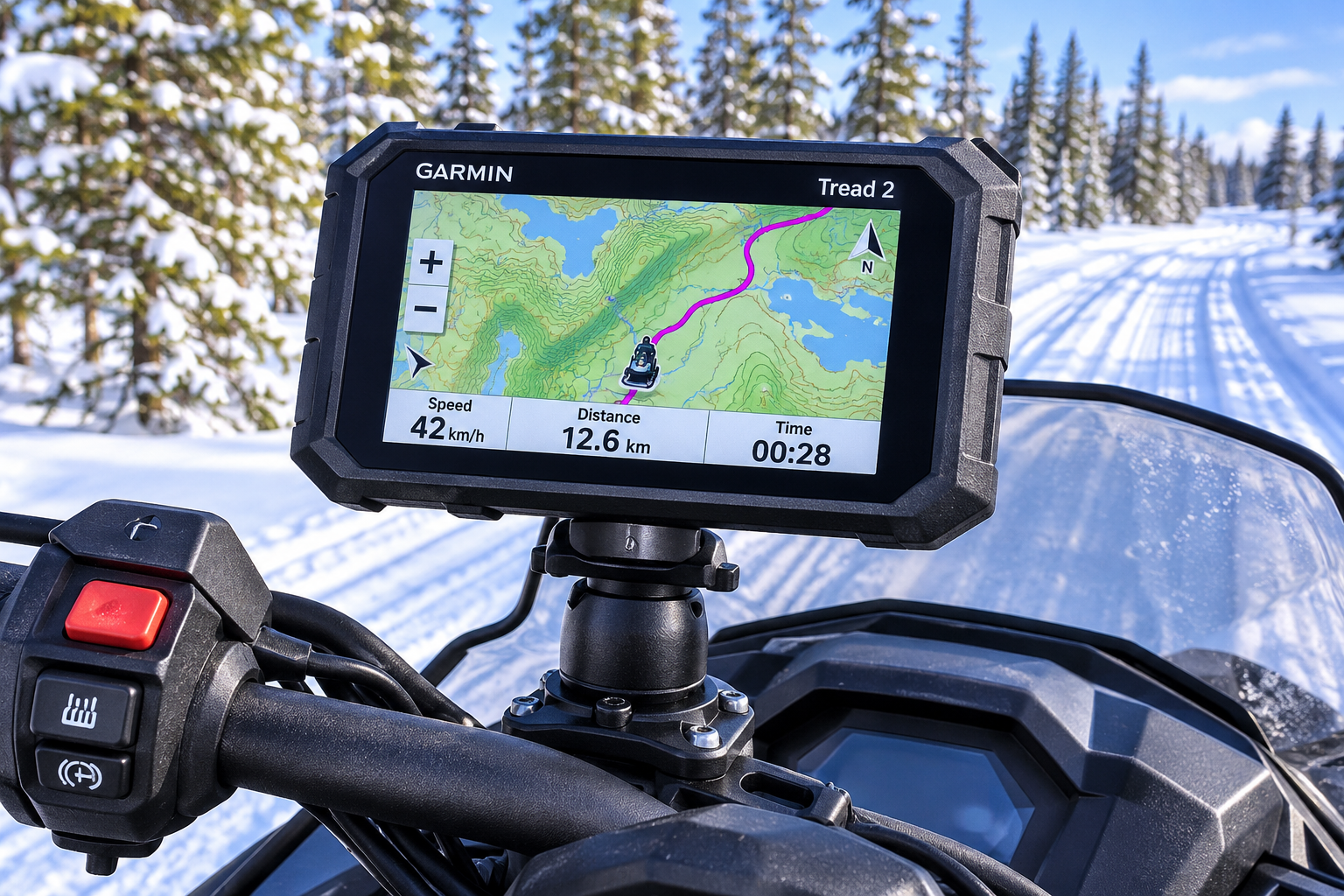
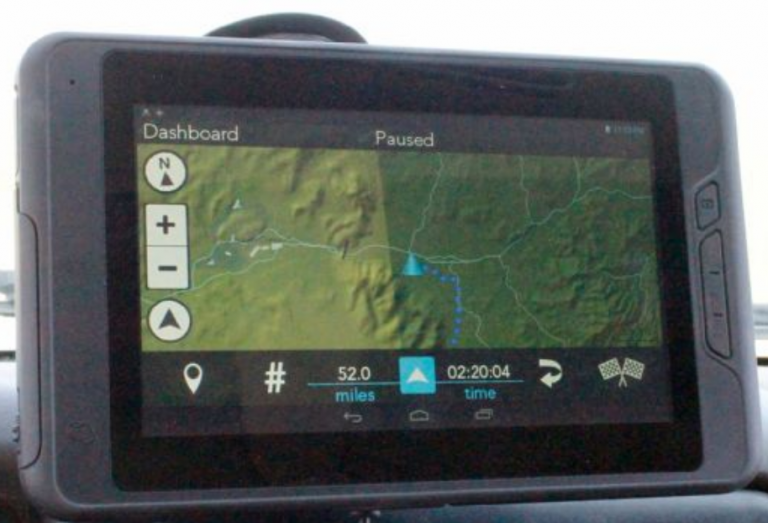
The Garmin Tread 2 is the navigator most trail riders should buy. It is built specifically for powersports, and snowmobiling is a core use case, not an afterthought.
The 6-inch display is high-resolution, ultrabright and designed to be used with gloves. The unit carries an IP67 dust and water rating and a MIL-STD-810 drop rating, so snow, vibration and the occasional hard landing are part of the job description.
Why snowmobilers love it:
- Snowmobile trail content for select regions in the U.S. and Canada, plus snowmobile-accessible locations like fuel stops, warming shelters and restaurants. Garmin has also announced integrated snowmobile routes for Sweden, Finland and Norway, which is good news for European and Nordic riders.
- Turn-by-turn off-road navigation, topographic maps, high-definition elevation maps and satellite imagery.
- 64 GB internal storage plus a microSD slot for extra maps.
- Group ride tracking with the optional Group Ride Radio accessory, including push-to-talk voice, so you can see where your riding buddies are even without cell coverage.
- inReach pairing: connect it to a Garmin inReach (like the Mini 3 Plus below) for two-way text messaging, interactive SOS and weather on the big screen.
- Optional Handlebar Controller lets you operate the unit without reaching for the screen.
With an Outdoor Maps+ subscription, you also get premium layers such as avalanche risk reports and slope angle shading, which matter a lot in mountain terrain.
Pros
- Purpose-built for sleds, with real snowmobile trail data
- Big, bright, glove-friendly screen
- Runs on sled power, no battery anxiety
- Excellent group-ride and inReach integration
Cons
- Premium price
- No built-in satellite SOS (needs a paired inReach)
- Stays on the sled – not something you carry if you have to walk out
Verdict: If you ride groomed trail networks and want the easiest, most capable dash-mounted navigator, the Tread 2 is the one to beat.
👉 Check Garmin Tread 2 price on Amazon
2. Garmin Montana 710i – Best for Backcountry and Mountain Riding
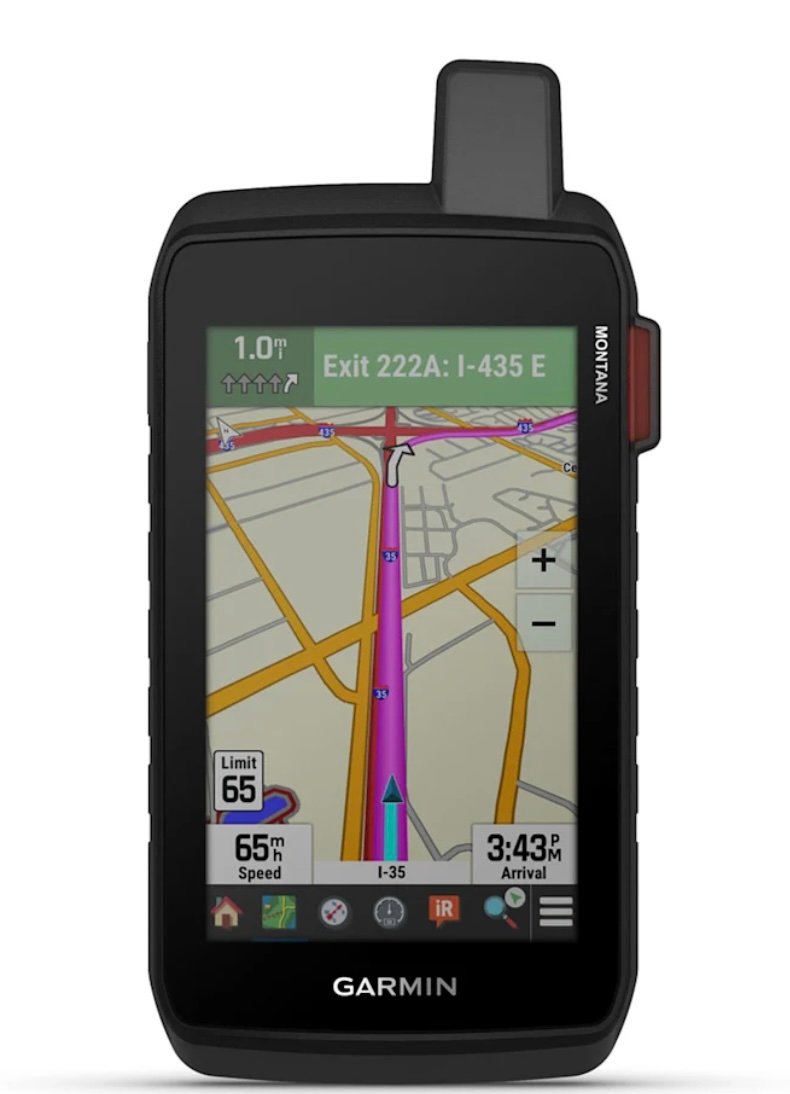
The Garmin Montana 710i is the choice for riders who leave the groomed trails behind. It is a rugged handheld GPS with built-in inReach satellite technology, which means two-way messaging and interactive SOS work anywhere in the world, without a separate device (subscription required).
The 5-inch glove-friendly touchscreen is smaller than the Tread 2, but still large enough to read on the move. It meets MIL-STD-810 for thermal, shock and vibration resistance and is rated IPX7 for water.
Key features for snowmobiling:
- Built-in inReach: two-way satellite messaging, interactive SOS and location sharing
- Battery life: up to 24 hours in GPS mode and up to 432 hours in expedition mode
- USB-C charging, so you can top it up from a power bank or a USB port on the sled
- Multi-GNSS support (GPS and Galileo) for better reception in tough terrain
- 32 GB of memory for maps, plus Wi-Fi, Bluetooth and ANT+
- Works with a range of vehicle mounts (sold separately)
The big advantage over a dash unit is that the Montana comes with you. If you get stuck in a gully, break down miles from the trailhead or have to walk out, your map, tracks and SOS are still in your hand.
Pros
- Navigation and satellite SOS in one rugged device
- Removable – goes with you if you leave the sled
- Strong battery life and USB-C charging
Cons
- Weighs about 410 g, heavy for a handheld
- Battery performance drops in deep cold; keep a power source handy
- Snowmobile trail data is less polished than on the Tread 2
- Requires an inReach subscription for messaging and SOS
Verdict: For mountain riders, ice-fishing trips and anyone riding solo in remote country, the Montana 710i offers the best combination of navigation and safety in one box.
👉 Check Garmin Montana 710i price on Amazon
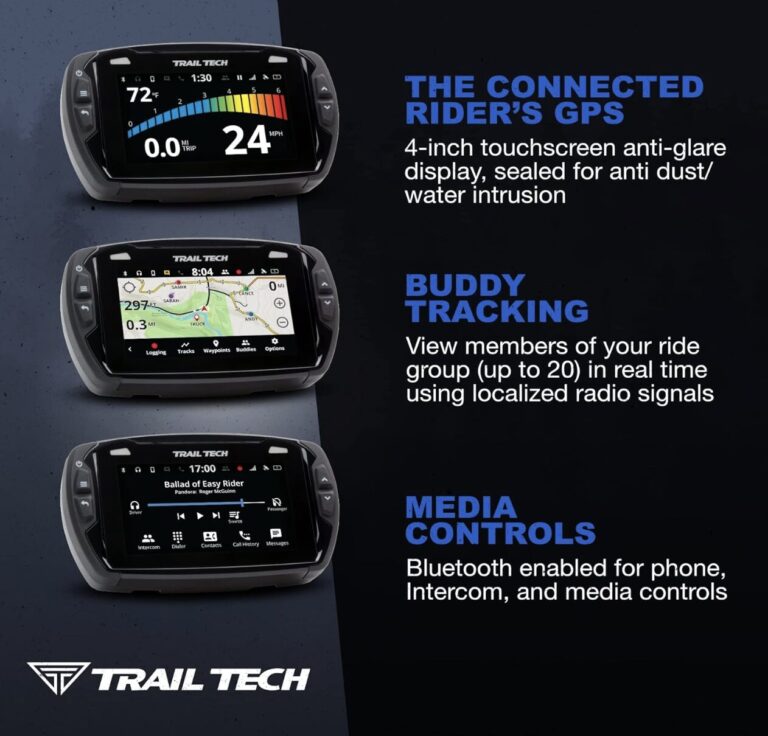
3. Trail Tech 912 Voyager – Best GPS and Digital Gauge Combo
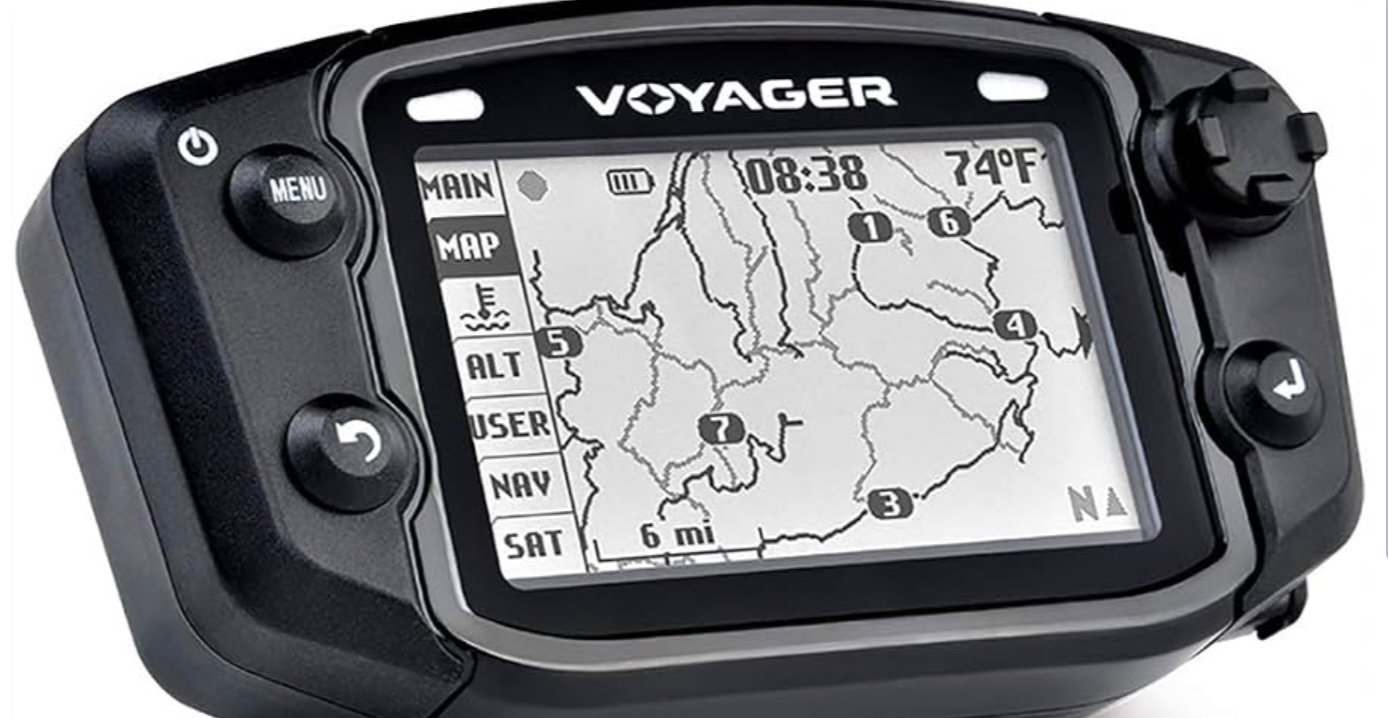
The Trail Tech Voyager takes a different approach. It is a GPS navigator and a digital gauge in one unit, made by a company that has built off-road electronics for years.
The Voyager uses standard Trail Tech vehicle sensors to show engine temperature, RPM, battery voltage, speed and distance alongside your map. For riders on older sleds with basic gauges, that is a real upgrade, and it frees up handlebar space because you need only one screen.
Key features:
- GPS speed, distance, compass, altitude, temperature and maps
- View, organize, edit and share entire trail systems in 3D
- Record your own trails or follow maps downloaded from other riders
- Engine data from Trail Tech sensors (included or sold separately, depending on kit)
- Universal and model-specific kits; the 912-122 is the universal snowmobile kit
Pros
- GPS and engine gauges in one dash display
- Usually the most affordable option on this list
- Good trail recording and sharing tools
Cons
- Older platform – screen and mapping are not on the level of the Tread 2
- No satellite messaging or SOS
- Some kits are being phased out, so check that the listing is genuine, new stock
- Installation takes more time because of the sensors
Verdict: A smart buy for riders who want trail navigation and better engine data on a budget. Pair it with an inReach Mini 3 Plus for safety. If you want Trail Tech’s newer platform, look at the Voyager Pro.
👉 Check Trail Tech Voyager price on Amazon
4. Garmin inReach Mini 3 Plus – Best Satellite Safety Backup
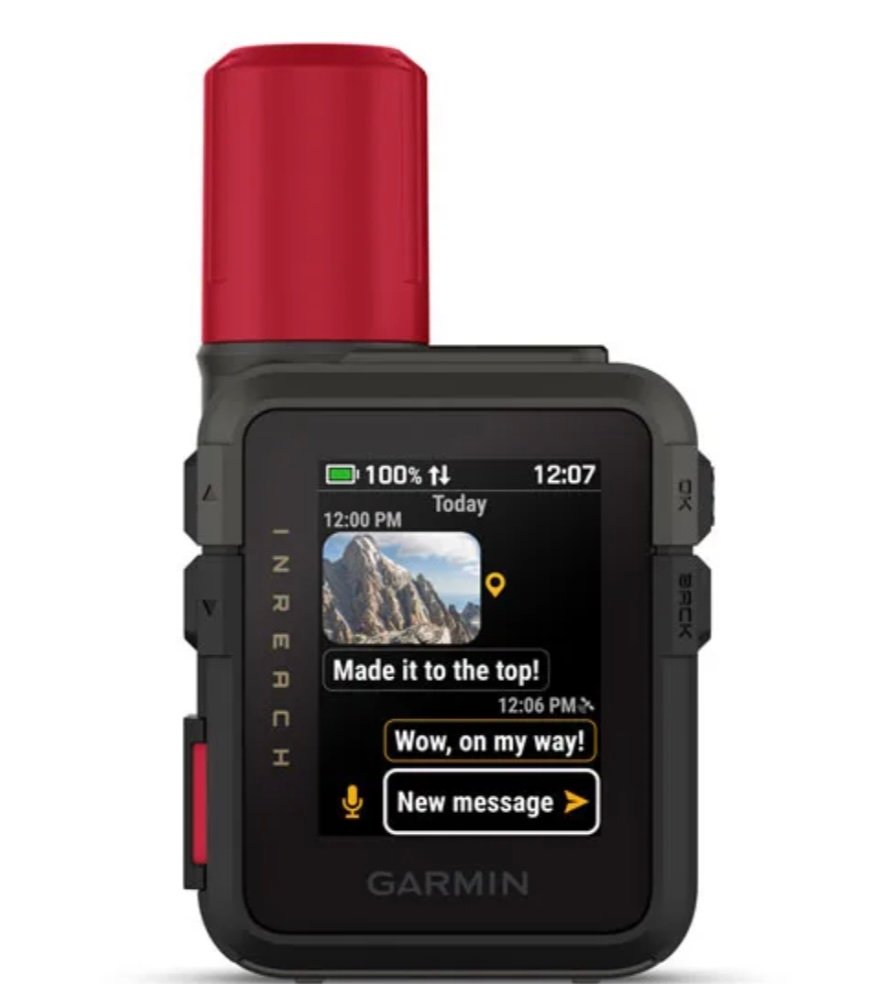
The Garmin inReach Mini 3 Plus isn’t a primary navigator, but it may be the most important item on this list. It is a pocket-sized satellite communicator that lets you send messages and trigger an interactive SOS to Garmin Response, a 24/7 emergency coordination center, from anywhere with a view of the sky.
The new Mini 3 generation adds a 1.9-inch colour touchscreen, and the Plus model adds voice messages and photo sharing, which can help rescuers and family understand your situation faster.
Key features:
- Two-way satellite messaging and interactive SOS (subscription required)
- Up to 350 hours of battery life with 10-minute tracking
- Voice and photo messaging (Plus model only)
- IP67 water and dust rating
- Pairs with the Garmin Tread 2 so you can read and reply to messages on the big screen
- Weighs only about 125 g – it fits in a chest pocket
Cold-weather tip: Garmin lists an operating range down to -20°C. On a cold day on a sled, carry it in an inside jacket pocket rather than on the handlebars, so it stays warm and stays with you.
Pros
- Lightweight, always on your body
- Excellent battery life
- Works with the Tread 2 for a complete system
Cons
- Subscription required
- Small screen, not a replacement for a full navigator
- Some owners report shorter battery life than the Mini 2 when using all features
Verdict: Every backcountry rider should carry a satellite communicator. If your GPS does not have inReach built in, this is the one to add.
👉 Check Garmin inReach Mini 3 Plus price on Amazon
5. RAM Mounts Handlebar Kit – Best Mounting Upgrade
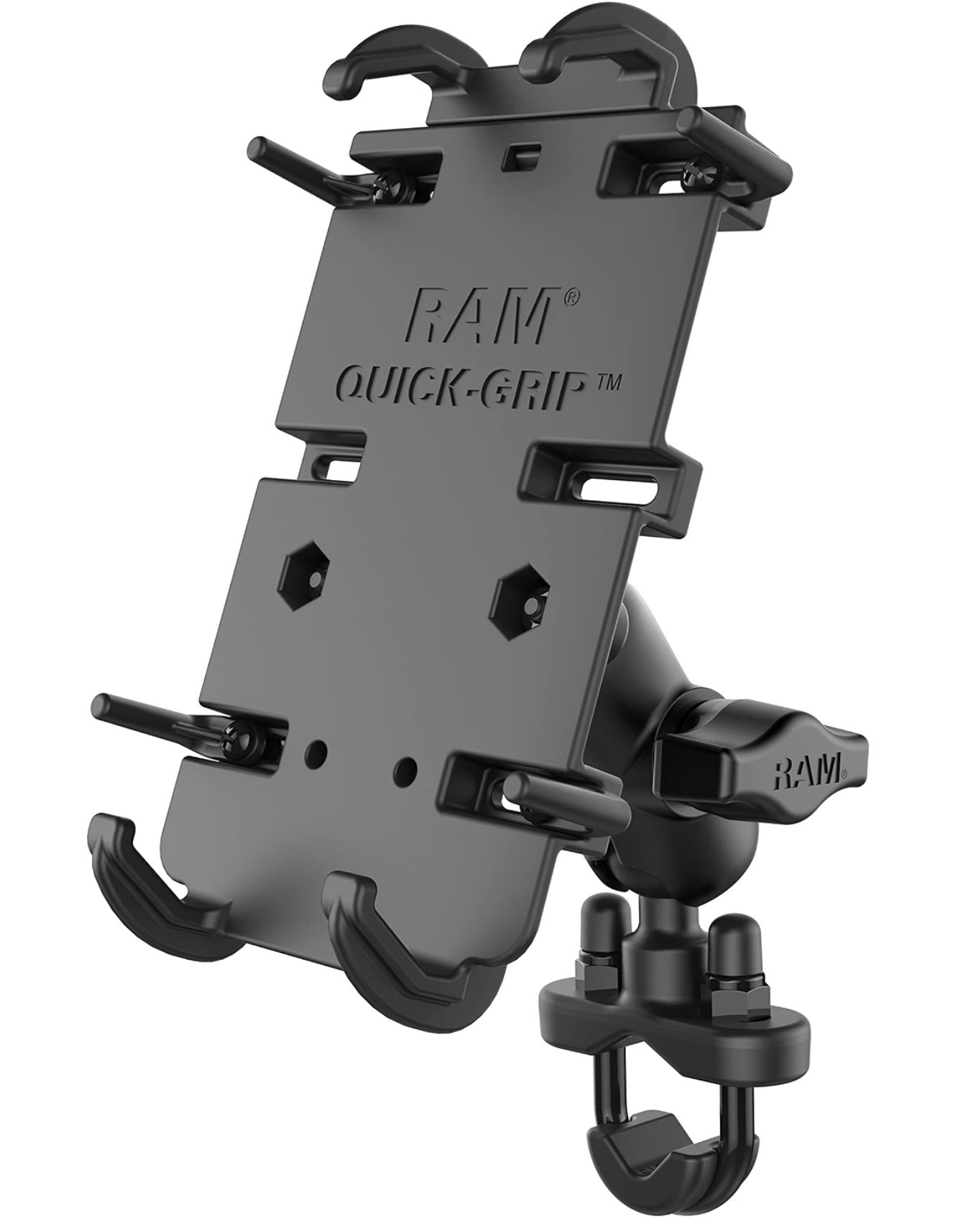
The best GPS in the world is useless if it vibrates loose and disappears into a snowbank. Snowmobiles shake hard, especially on rough, moguled trails, and plastic stock mounts are often the weak link.
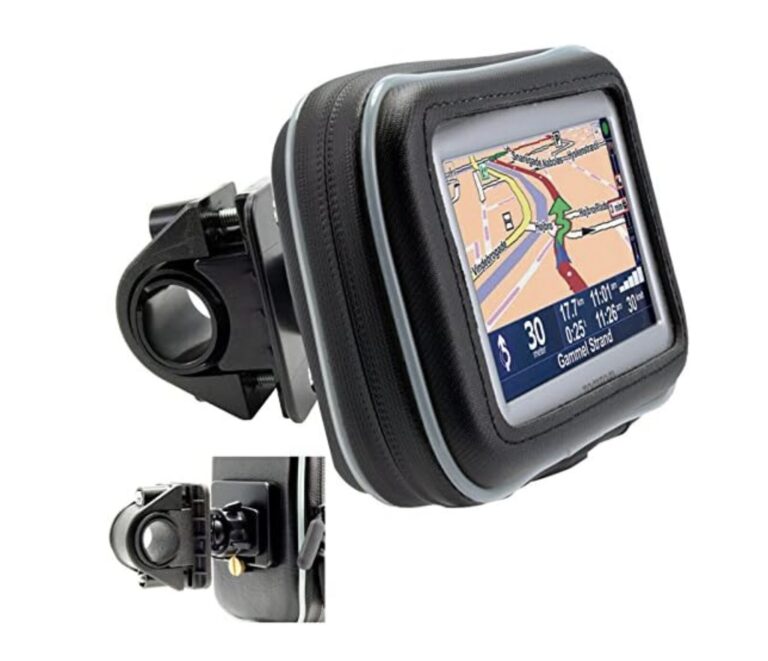
RAM Mounts are the go-to upgrade for powersport riders. The system uses a rubber ball and a double-socket arm: you bolt a base to the handlebar or crossbar, then attach your device cradle. The rubber ball absorbs vibration and lets you angle the screen exactly where you want it, away from glare.
Why it is worth adding:
- Handlebar U-bolt bases fit most snowmobile bars
- Short, medium and long arms let you position the screen above the windshield line or close to the bars
- AMPS-pattern plates work with many GPS cradles, including Garmin handheld and powersport mounts
- Tough, corrosion-resistant construction handles road salt and moisture
Tips for choosing the right RAM setup:
- Measure your handlebar or crossbar diameter before buying a base.
- Use the shortest arm that gives you a clear view—shorter arms vibrate less.
- Check the hole pattern on your GPS cradle (AMPS is most common) and buy the matching plate.
- Add a tether as a second line of defence for handheld units like the Montana 710i.
👉 Check RAM Mounts snowmobile kits on Amazon
Which Snowmobile GPS Should You Buy?
- Mostly groomed trails, riding with friends: Garmin Tread 2. Add the inReach Mini 3 Plus if you ride outside cell coverage.
- Mountain, backcountry or solo riding: Garmin Montana 710i, or Tread 2 + inReach Mini 3 Plus for the bigger screen.
- Tight budget or older sled with basic gauges: Trail Tech Voyager, ideally with an inReach for safety.
- Already own a GPS: Upgrade to a RAM mount and add an inReach Mini 3 Plus.
The strongest setup for most serious riders is a dash-mounted navigator (Tread 2) plus a satellite communicator in your pocket (inReach Mini 3 Plus). You get the best screen and maps on the sled, and the SOS device stays with you even if you and the sled get separated.
Snowmobile GPS Tips for Cold Weather
- Warm batteries last longer. Keep handheld devices and spare power banks inside your jacket until you need them.
- Download maps at home. Load trail maps and routes over Wi-Fi before the ride; do not count on coverage on the trail.
- Share your plan. Tell someone your route and expected return time, and share your live tracking link if your device supports it.
- Test SOS and messaging before the season. Activate your subscription and send a test message from your driveway, not from the middle of a frozen lake.
- Carry a backup. A paper map and compass weigh almost nothing.
Frequently Asked Questions
Can I use my phone as a snowmobile GPS?
For short rides on well-covered trails, a phone with offline maps can work. But phones struggle with cold, glare and gloves, their batteries drain fast in low temperatures, and they offer no satellite SOS in most regions. A dedicated unit is far more reliable.
Does the Garmin Tread 2 have SOS?
Not on its own. The Tread 2 gives you interactive SOS, two-way messaging and weather when it is paired with a compatible inReach device, such as the inReach Mini 3 Plus.
Do I need a subscription for inReach?
Yes. Satellite messaging and SOS on the Montana 710i and inReach Mini 3 Plus require an active Garmin inReach subscription. Navigation features work without it.
Is the Garmin Montana 710i good for snowmobiling?
Yes, especially for backcountry riders. It is rugged, glove-friendly, has built-in satellite SOS and can be removed from the sled if you need to walk out. Use a solid mount and keep a power source on hand in deep cold.
What is the best mount for a snowmobile GPS?
A RAM Mounts handlebar base with a short double-socket arm and the correct cradle plate is the most popular choice. It reduces vibration and lets you adjust the viewing angle.
Final Verdict
The Garmin Tread 2 is the best GPS for snowmobile trail riding in 2026, thanks to its big glove-friendly screen, snowmobile trail data and group ride features. Backcountry riders should take a hard look at the Garmin Montana 710i for its built-in satellite SOS, while the Trail Tech Voyager remains a capable budget combo of GPS and gauges.
Whichever navigator you choose, carry a satellite communicator like the Garmin inReach Mini 3 Plus and lock everything down with a RAM Mounts kit. Good navigation gets you to the best riding; good safety gear gets you home.
👉 See all snowmobile GPS deals on Amazon
This article was created with AI assistance and reviewed by a human editor.
Disclosure: This post contains Amazon affiliate links. If you buy through them, we may earn a small commission at no extra cost to you.
About The Author